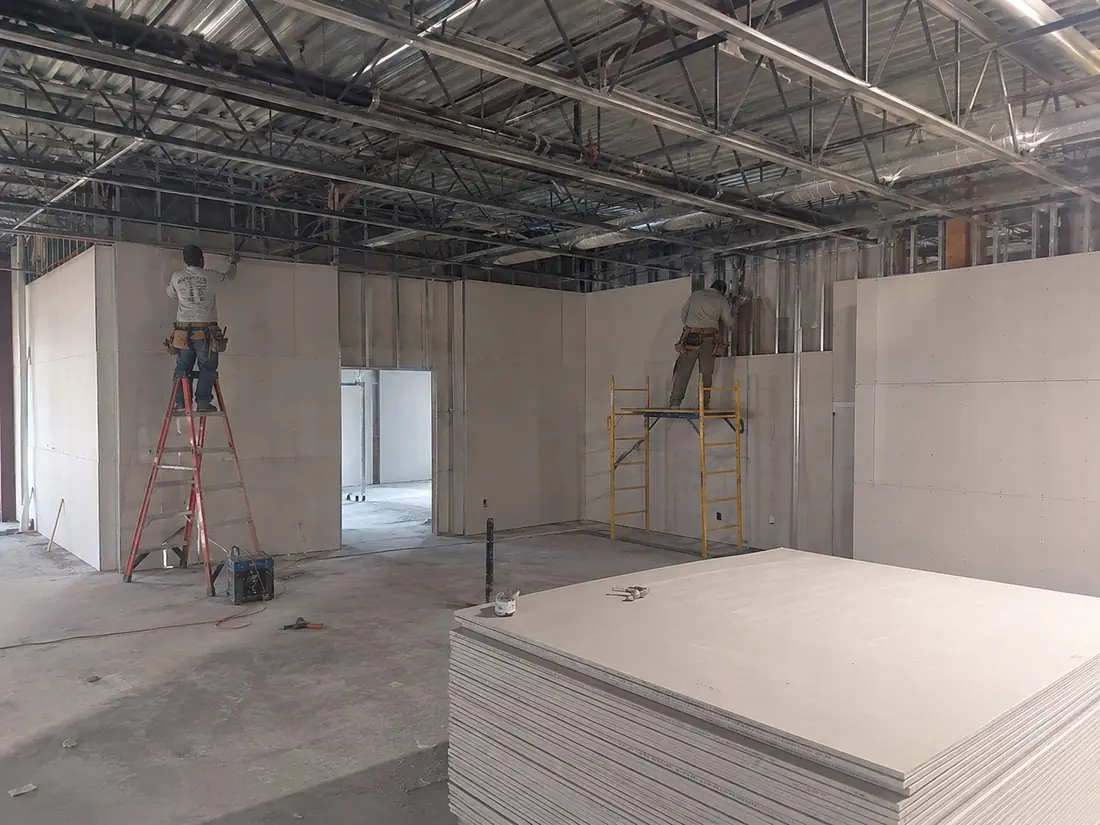
Most calls we take in Shreveport fall into one of six categories. Knowing which one you have changes both the repair and whether the problem comes back.
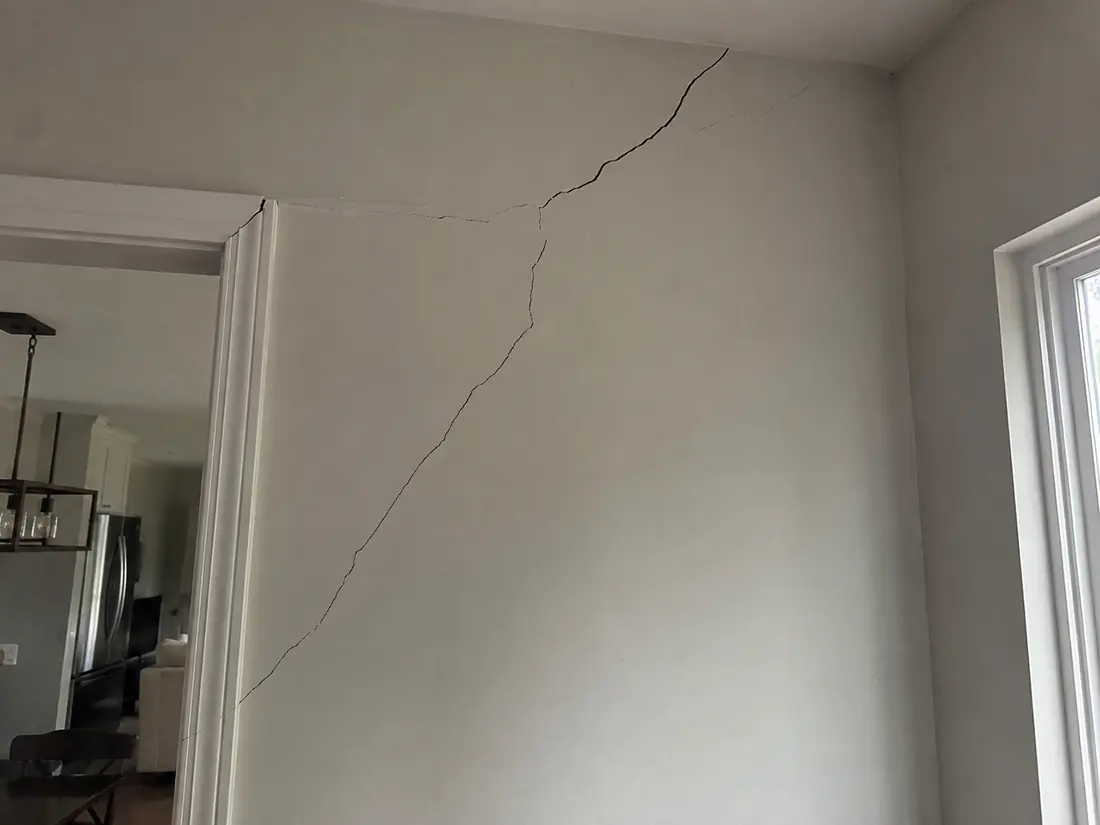
Settlement and Foundation Cracks
Diagonal cracks running from the upper corners of doors and windows are the signature of a house that is moving. Much of the Shreveport area sits on clay-rich soil that swells when saturated and shrinks during dry spells, flexing the frame and concentrating stress at openings. Patching alone treats the symptom. If a crack has reopened in the same spot more than once, the drywall is reporting a structural and drainage issue, and we will say so instead of selling the same repair twice.
Expansive clay soils are among the most widespread causes of foundation movement in the U.S.
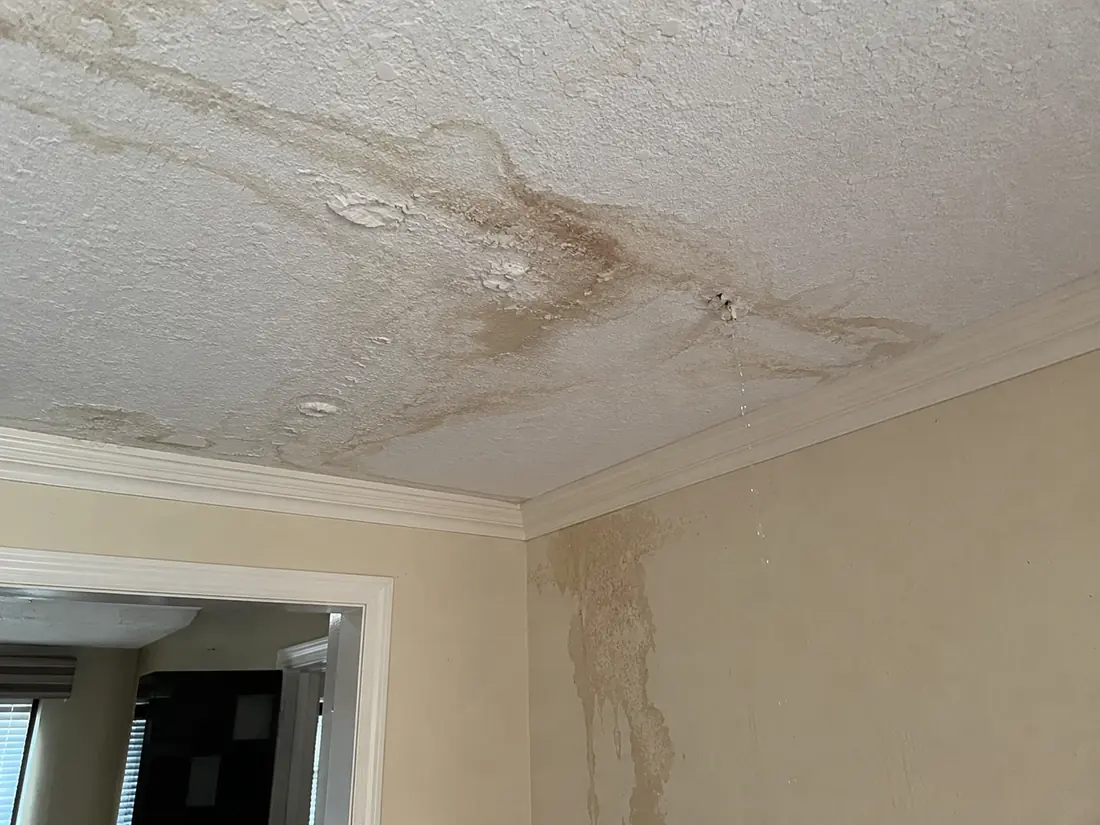
Water Stains and Ceiling Leaks
A brown ring on a ceiling means water has already passed through the board, and the stain is downhill from the actual leak, not underneath it. The EPA notes that mold can begin growing on damp materials within 24 to 48 hours, which makes wet drywall a time-sensitive problem rather than a cosmetic one. We locate and confirm the source is stopped, cut back to dry material, verify the framing and insulation behind it, and only then close the ceiling up.
EPA: mold can begin growing on damp material within 24–48 hours
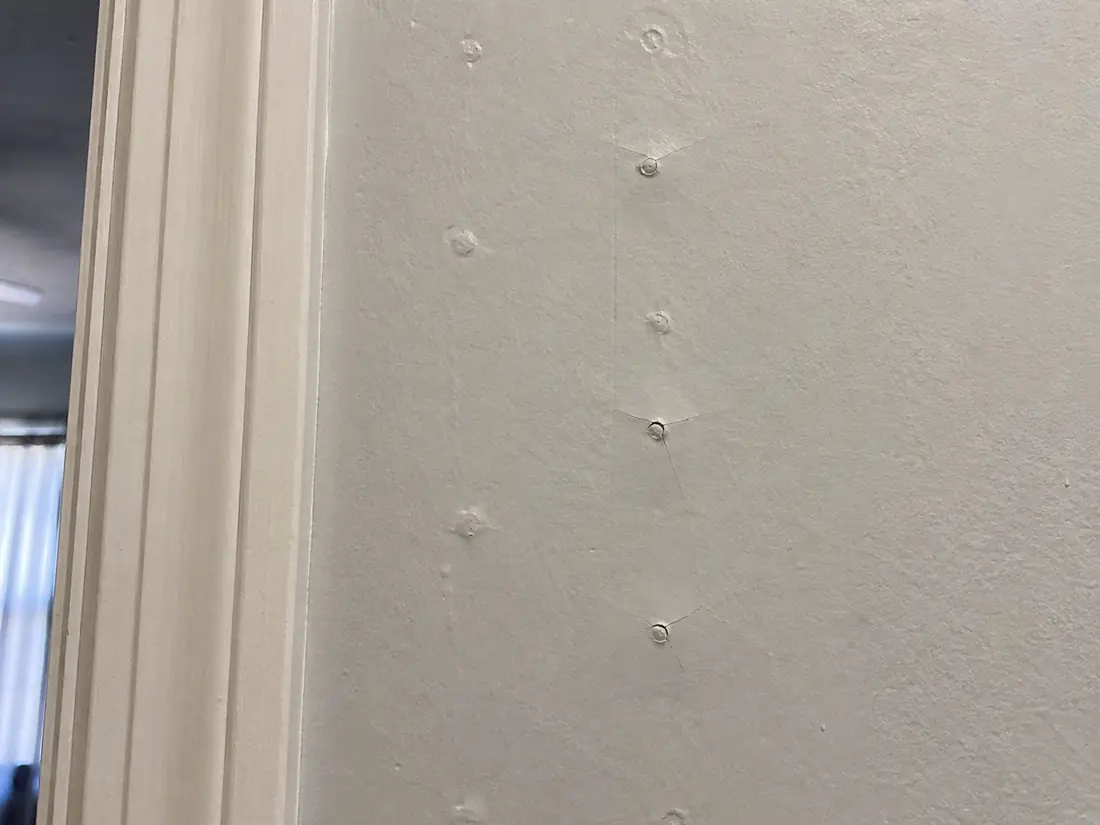
Nail Pops and Fastener Failure
Small circular bumps or dimples in a line up a wall are fasteners backing out as framing lumber dries and shrinks. Simply re-driving the same nail almost always fails again. The durable fix is to drive a screw roughly an inch and a half away to re-anchor the board, remove or reset the failed fastener, then patch both. Homes built during a fast construction cycle, where lumber went up with higher moisture content, tend to show this within the first few years.
Framing lumber can shrink measurably as it dries to indoor equilibrium moisture
Sagging Ceilings
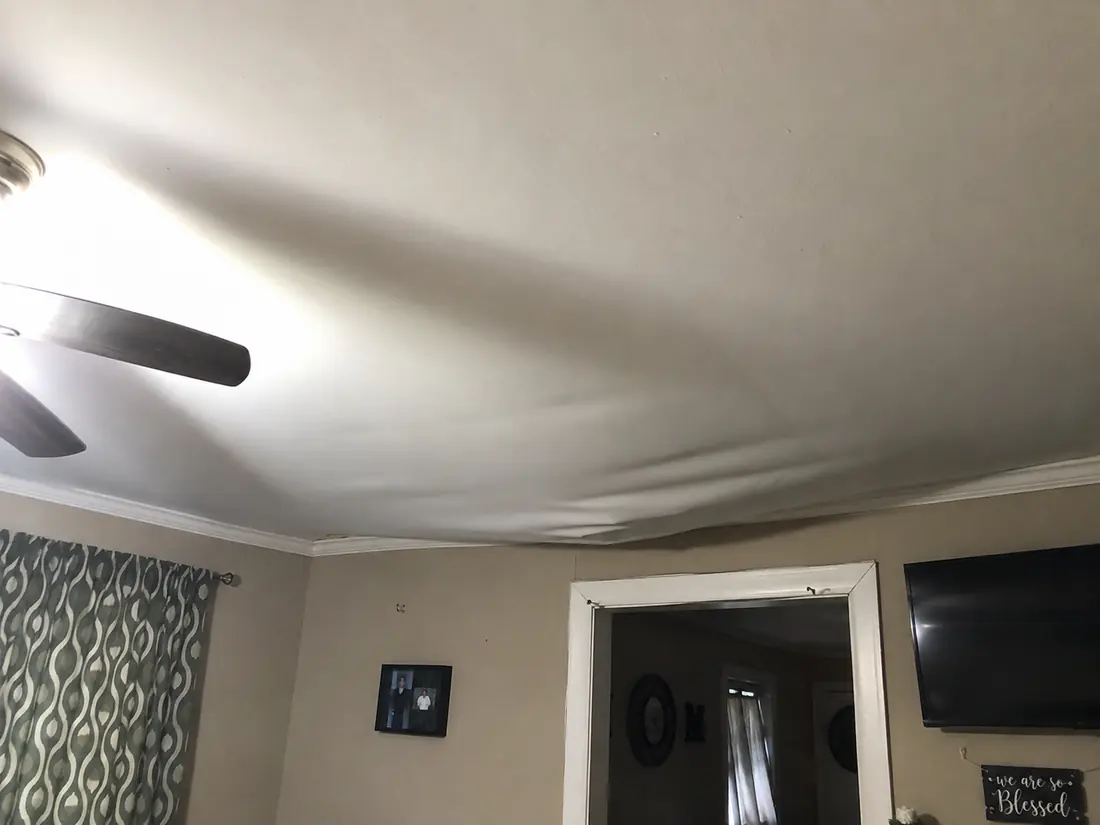
Ceilings sag between joists when the board is too thin for the framing spacing or has absorbed moisture. Half-inch board on joists spaced 24 inches on center is a common culprit, particularly if it was later sprayed with a water-based texture that added weight while it was wet. The correct specification is 5/8-inch board, or half-inch board rated specifically for ceiling spans. We check the framing spacing before quoting, because replacing sagging board with the same product repeats the failure.
5/8″ board is the standard specification for joists at 24″ on center
Corner Bead Damage
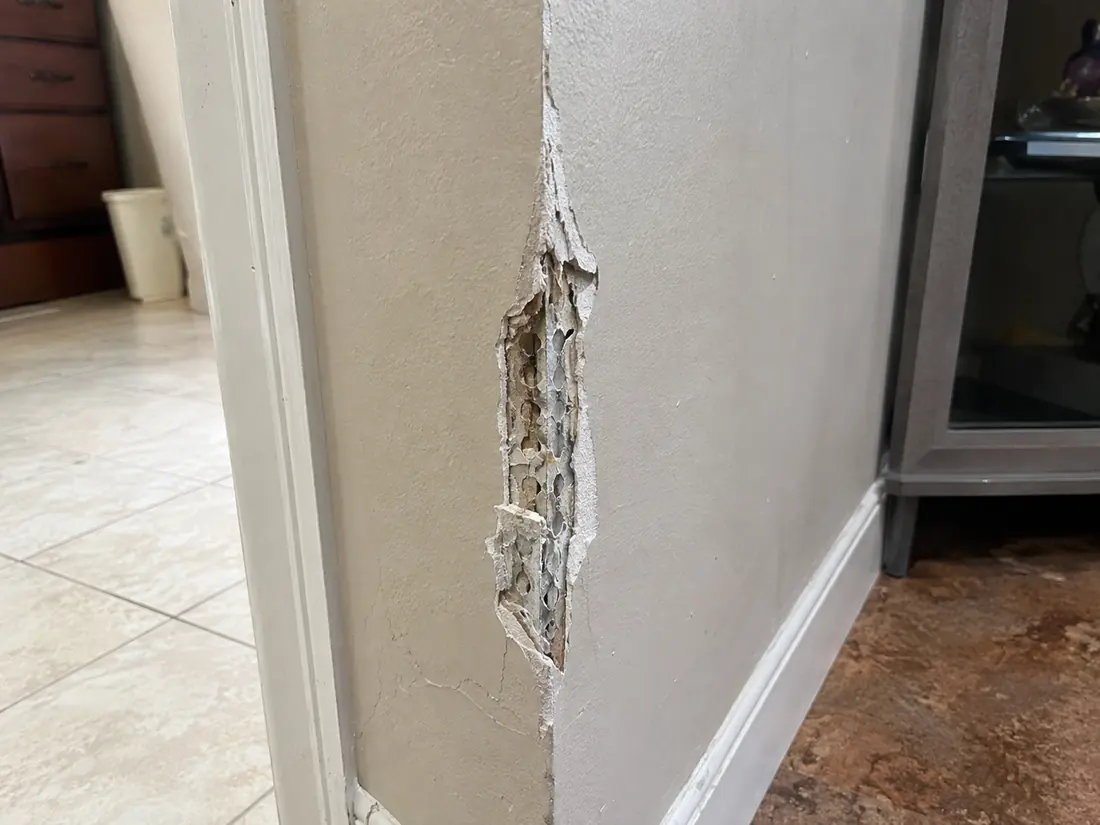
Outside corners take the most physical abuse in any house: furniture, vacuums, luggage, kids. Metal bead dents and holds the dent; vinyl bead cracks the compound around it. A proper repair removes the damaged bead section entirely rather than filling over it, because compound applied on top of a bent bead will crack along the same line within a season. In high-traffic hallways we recommend vinyl or paper-faced bead, which absorbs impact better than bare metal.
Corners in main traffic paths take the majority of residential wall impact damage
Seam Cracking and Tape Failure
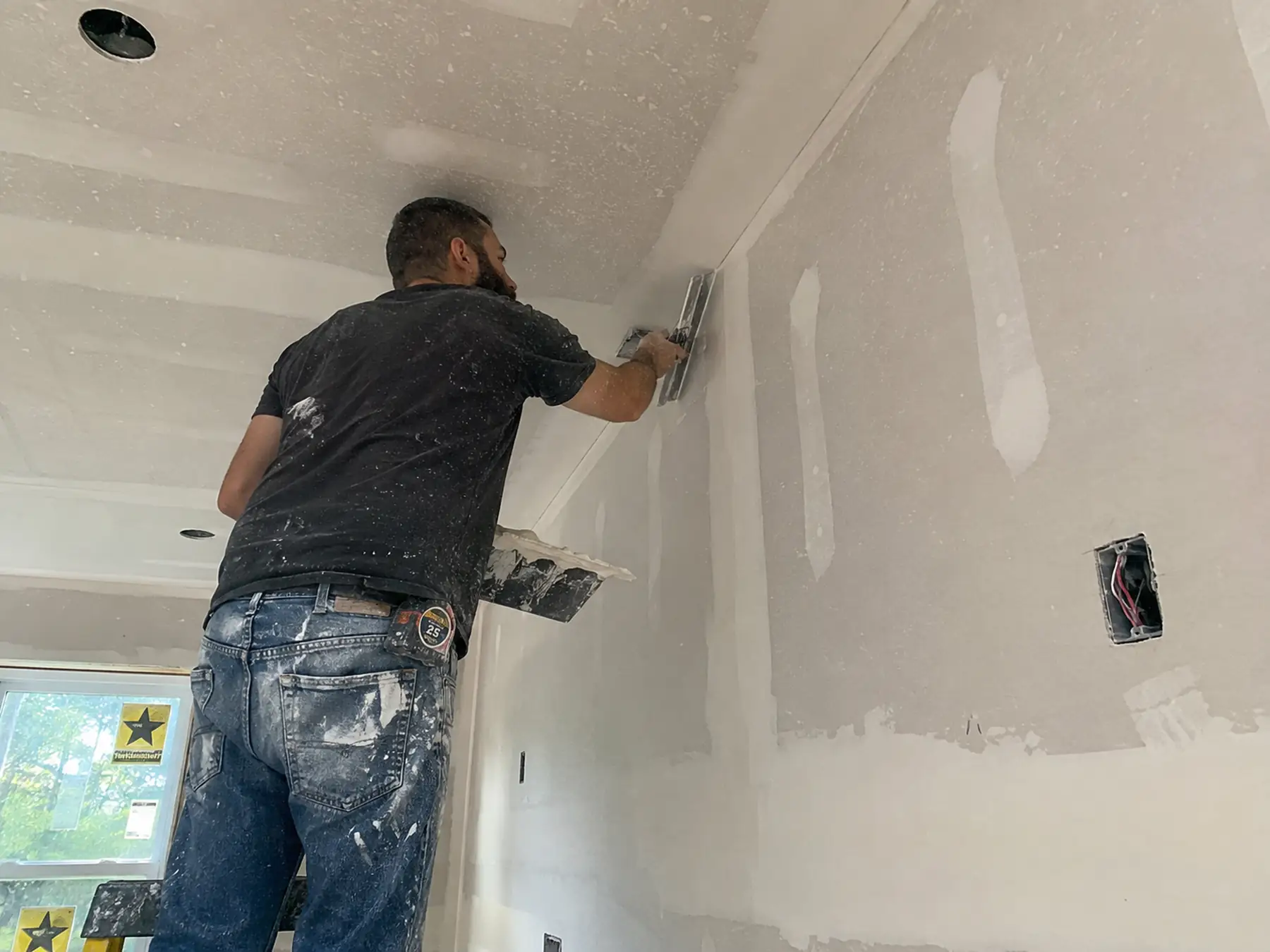
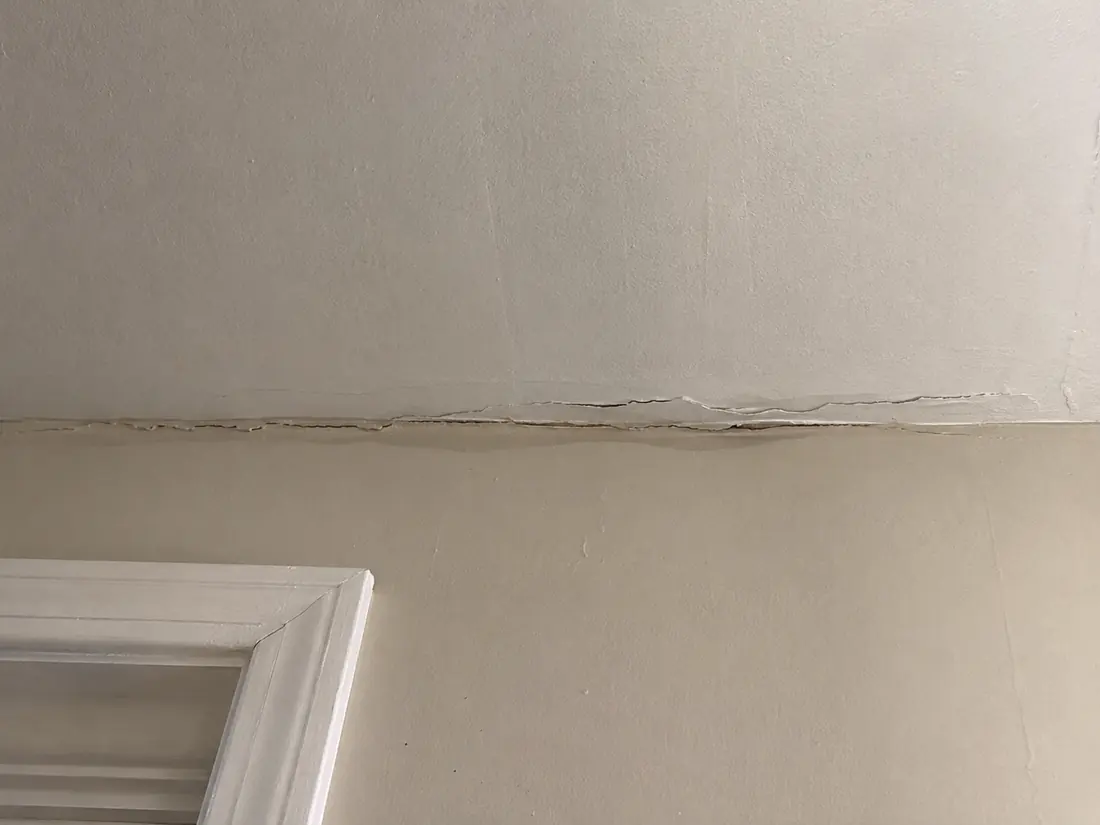
A straight crack that follows a joint line means the tape underneath has released. That is usually a finishing problem rather than a structural one: compound applied too thick, coats stacked before the previous one dried, or tape bedded into insufficient mud. Humidity makes it worse, because a crew working to a fixed schedule instead of actual dry time traps moisture in the joint. The repair is to cut out the failed tape and rebed it, not to skim over the crack.
Joint compound requires full dry time between each of three typical coats